About Pebbles Sangha
Pebbles Sangha has been based in the city of Brighton & Hove since 1998. We practice Mindfulness and Engaged Buddhism in the Plum Village tradition of Vietnamese Zen Master Thich Nhat Hanh.
Everyone is welcome at Pebbles, regardless of background, identity, or level of experience. Pebbles is a nurturing and mutually supportive community, with an emphasis on mindfulness, compassion, inclusivity and ethical living. Our practice includes regular recitation of the Five Mindfulness Trainings which represent the Buddhist vision for a global spirituality and ethic. Our practice is supported by the Order of Interbeing and is deeply rooted in a Vietnamese Zen Buddhist tradition that has been nurtured and transmitted across many generations.
The Sangha offers a welcoming, peaceful and safe space for meditation, deep sharing, and mutual support on the path. Many people have found greater peacefulness, happiness and joy through the Plum Village mindfulness practice.
We hold fortnightly in-person practice sessions on a Saturday morning, at Patcham Community Centre, and weekly online practice sessions on Wednesday evenings. Several times a year we hold a Day of Mindfulness. You will find more information about our practice meetings here.
Following the opening of the Being Peace Practice Centre in the Forest of Dean in 2026, we will be organizing an annual Sangha Retreat.
Regular Sangha Activities
Weekly Coffee mornings alternate between Tuesday and Wednesday every week, so that as many people as possible can attend. At 10am at a local venue.
Monthly Sunday brunch meetings on the last Sunday of the month, at another local venue.
The Creative Circle meets periodically at various venues around Brighton & Hove, to share their
experiences around creative work and Mindfulness practice.
Pebbles Sangha’s Dharma Study Group meets online monthly, to read and discuss a Buddhism-related book that is chosen by the group. A new group forms for each new book.
Pebbles Sangha members are also able to join Heart of Hastings Sangha’s book group, which is held monthly.
Enquire here if you would like to know more about any of these activities.
Dana / Regular Giving
Regular sangha members often make a regular bank transfer. It all helps with the cost of holding sangha meetings and retreats; it includes our core running costs such as room rentals for example. We also pass on the benefit to other charitable organisations including the Being Peace Centre (Plum Village UK), Plum Village (France) and local charities in the City.
Growing an Inclusive Sangha
Pebbles Sangha brings together people from many different backgrounds, experiences and identities. Some have been practising for many years, while others are joining us for the first time. Some have a Buddhist background, while many do not. Whatever brings you here, you are warmly welcome.
If you’re thinking about coming for the first time and have any questions, or if there’s anything that would help you feel more comfortable attending, we’d be very happy to hear from you. Whether you have accessibility needs, would like to know what to expect, or simply feel nervous about coming on your own, please get in touch via our contact form.
We recognise that, like many mindfulness communities in the UK, our sangha is currently made up predominantly of White practitioners. We also know that whether people feel safe and welcome can be shaped by many aspects of identity, including race, ethnicity, disability, neurodiversity, gender, sexuality, age, culture, faith background and class. We recognise that not everyone has experienced Buddhist communities as welcoming or inclusive, and we are committed to learning, listening and doing our best to create a community where everyone feels respected, valued and able to participate.
Across the wider Plum Village community there are also affinity groups — practice groups for people who share a particular identity or life experience, including BIPOC, LGBTQIA+, disabled and neurodivergent practitioners, younger practitioners and others. Many people find it supportive and empowering to practise in an affinity group, often alongside attending their local sangha. For a full list of affinity groups and more information, see the Plum Village UK webpage.
We know that creating an inclusive community takes more than good intentions. It asks us to listen carefully, reflect honestly, and be willing to change when we need to. We won’t always get everything right, but we are committed to learning from feedback and responding with humility. We see this as part of our practice together. We hope our sangha will continue to be enriched and to grow through the diversity of the people who practise here, and we look forward to welcoming you.
Honouring the Roots of Pebbles’ Practice
The mindfulness practices we share are rooted in a Vietnamese Zen Buddhist tradition that has been nurtured and transmitted across many generations (44th generation of the Lâm Tế (Linji) Dhyāna School and the 10th generation of the Liễu Quán Dharma Line). When Thích Nhất Hạnh (affectionately referred to as “Thây” – teacher) shared these teachings with people from different cultural backgrounds, he adapted Vietnamese Zen Buddhism so that its wisdom could be accessible while remaining rooted in the depth of his lineage.
Through his extraordinary life of engaged practice — including his work for peace during the Vietnam War, his years in exile, and the founding of Plum Village — Thây showed that mindfulness is not only a personal practice but also a way of responding to suffering in the world with compassion and courage.
We are deeply grateful to Thây, his teachers, and the generations of practitioners who preserved these teachings and made them available to us. As we practise together, we seek to remember and honour the roots from which our practice has grown, recognising that this tradition has been lovingly carried by countless people before us, especially within Vietnamese and wider Asian Buddhist communities.
May we walk this path with open hearts, remembering that we are part of a stream of practice that began long before us and continues through all those who care for it today.
Newsletter
If you wish to receive the regular Pebbles Sangha newsletter please let us know. The newsletter will keep you informed about sangha activities
Press for more Sangha photos
Frequently asked questions
What is mindfulness?
Mindfulness is the energy of being aware and awake to the present moment. It is the continuous practice of touching life deeply in every moment of daily life. To be mindful is to be truly alive, present and at one with those around you and with what you are doing. We bring our body and mind into harmony while we wash the dishes, drive the car or take our morning shower.
One can practise mindfulness throughout every moment of the day and not just in the meditation hall.
What is a Sangha?
A Sangha is a community that practises in harmony together, so that our practice of mindfulness becomes more joyful, relaxed and steady. We are bells of mindfulness, supporting and reminding each other along the path of practice.
What is the significance of bowing?
When we see someone join their palms to bow to us, we can do the same. Joining our palms and breathing in, we say a silent ‘A lotus for you’, so we’re offering a lotus flower to the other person.
What is walking meditation?
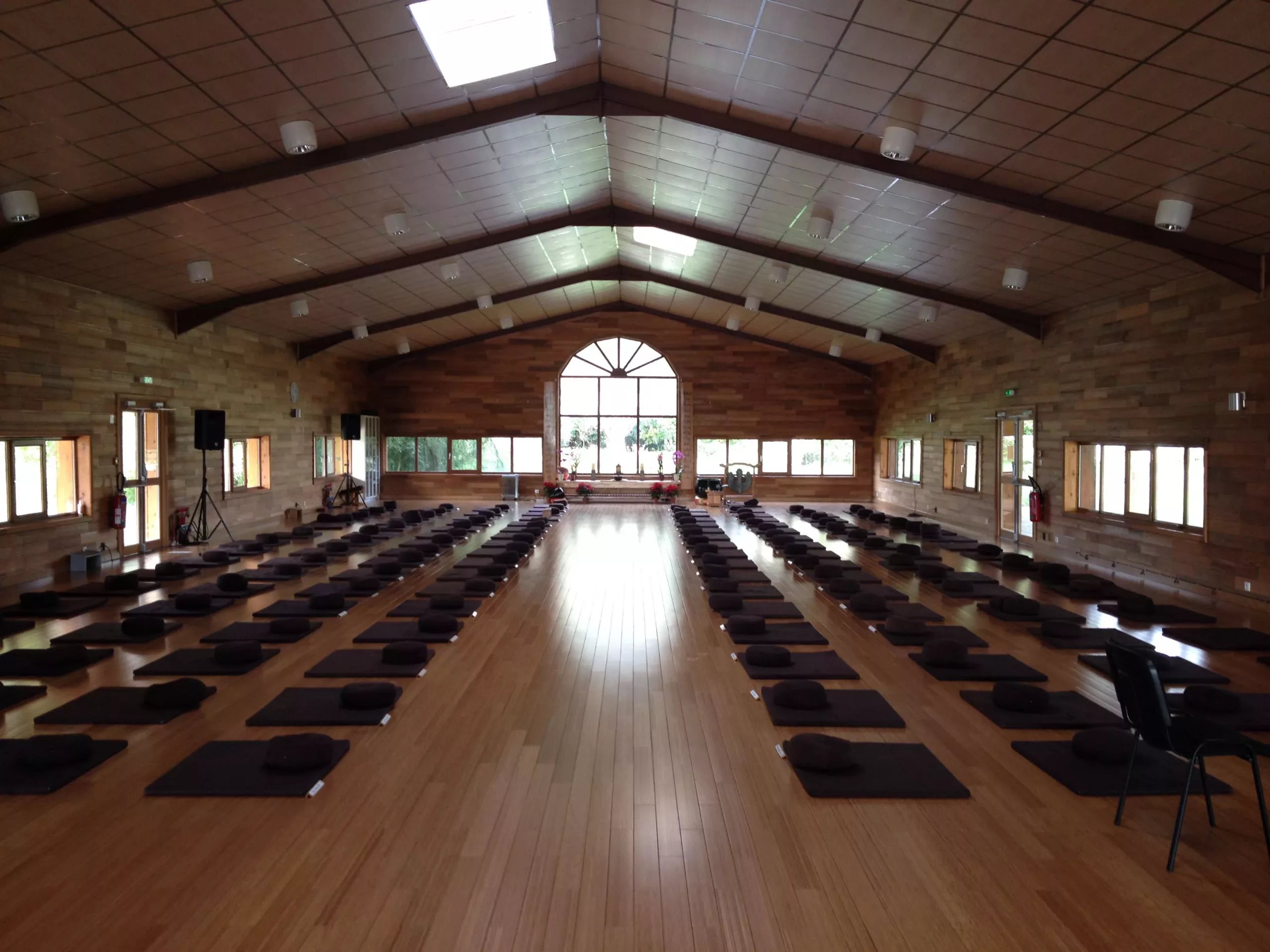
In between sessions of sitting meditation, we practise Kinh Hanh, which is an indoor walking meditation. We take one or two steps with each in-breath and each out-breath. The purpose is simply to walk, aware of your breath, your steps and the present moment.
What is the bell used for?
The bell is a central feature of our mindfulness practice. It acts like a bodhisattva helping us to come back to the present moment and concentrate our awareness. It helps us as a Sangha to be aware of each other and to practise in harmony. On retreat, for example, much of the co-ordination of activity is maintained through the skillful use of the mindfulness bell.
We do not say “striking” or “sounding” the bell but inviting the bell to sound. The small rod used to invite the bell is therefore known as the bell inviter.